Commercial Property Gunshot Detection
Commercial properties face a security vulnerability that access control and cameras cannot close: once a weapon is inside the building, there is no traditional security layer that automatically detects a shot, locates it, and alerts the right people simultaneously.
SDS delivers real-time gunshot detection purpose-built for commercial properties — sub-second alerts to facility security teams and 911, with near-zero false alarms and no audio recording.
Commercial properties face a critical gap in their security architecture
Gun violence in commercial office environments is not a hypothetical risk.
According to the FBI, 43% of active shooter incidents occur at places of business, and in high-rise commercial buildings. The consequences of a slow response compound quickly as a threat moves between floors, tenant spaces, and shared common areas.
Property owners and managers face real liability exposure when an incident occurs, and the post-incident question becomes: what automated systems were in place to detect the threat and respond before it escalated?
For security directors managing complex, multi-tenant buildings, that question has a defensible answer, but only if the right technology is deployed.
Traditional security leaves a critical gap inside the building
Weapons detection systems, metal detectors, and access control secure entry points, but they don’t follow a threat once it’s inside.
In a high-rise commercial building with open lobbies, shared elevator banks, and tenants managing their own floor-level security, there is no traditional layer that automatically detects a fired shot, identifies its location, and simultaneously alerts the right people.
A Manhattan office shooting that targeted a major organization illustrated exactly this failure: the lobby security guard was incapacitated before he could activate the elevator lockdown, allowing the shooter to reach upper floors. That dependency on a single human action — at the worst possible moment — is the gap gunshot detection closes.
How SDS Gunshot Detection Works in Commercial Properties
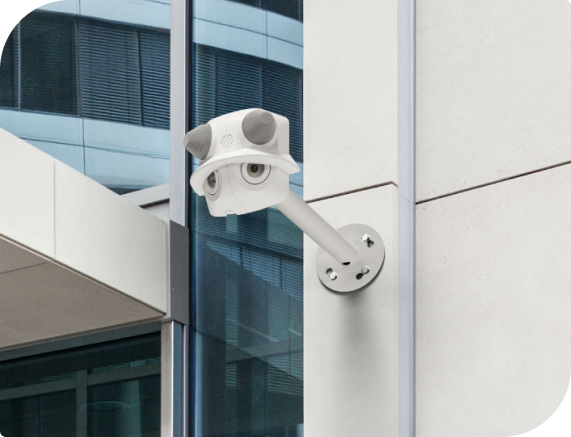
SDS uses multi-factor detection — combining acoustic and infrared sensors — to confirm gunfire in under one second within sensor range.
Both signals must be present simultaneously before any alert fires. This delivers 99.9% accuracy and a near-zero false alarm rate in the acoustically complex environments common to commercial buildings — lobbies, elevator banks, parking garages, and open-plan office floors.
Acoustic + infrared multi-factor detection
SDS requires two independent physical signals to be present simultaneously before any alert is triggered:
- Acoustic muzzle blast
- Infrared muzzle flash
Neither signal alone is sufficient.
The dual-physical confirmation separates SDS from single-sensor acoustic systems. It is the structural reason the system maintains a near-zero false alarm rate in enclosed commercial spaces where sound reflects off hard surfaces, walls, and ceilings.
Sub-second detection and automated alerting
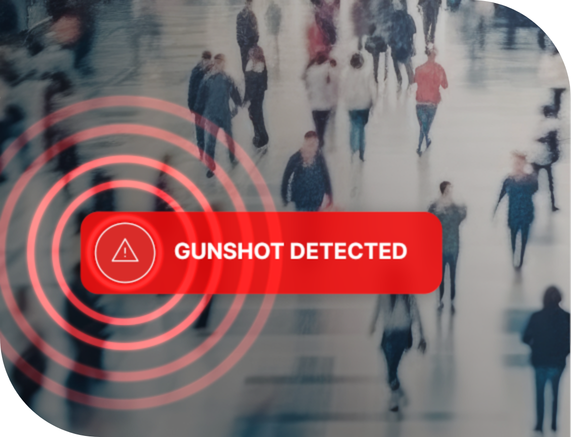
The moment gunfire is confirmed within sensor range, SDS simultaneously alerts facility security teams via the dashboard, SMS, and email. The moment gunfire is confirmed within sensor range, SDS simultaneously alerts facility security teams via the dashboard, SMS, and email. The floor plan of the impacted area is instantly displayed, including building, floor, and zone information.
ResponderLink routes verified location data directly to the correct 911 dispatch center, giving law enforcement precise location intelligence before they arrive on scene. Under normal operating conditions, SDS sensors alert in under one second indoors and under three seconds outdoors.
No audio recording. Privacy-friendly by design.
SDS sensors detect two physical phenomena — acoustic muzzle blast and infrared muzzle flash. No audio is recorded, stored, or transmitted. No images are captured. No tenant, employee, visitor, or resident data is collected at any point.
For commercial property owners and managers operating in multi-tenant and mixed-use environments, occupant privacy is both a legal and reputational concern. SDS’s passive, non-recording architecture addresses that directly. Gunshot detection can be deployed without introducing audio surveillance concerns into leased commercial spaces or residential units.
Built for the demands of a commercial property
99.9% detection rate
Validated by independent third-party testing, including an 18-month evaluation by the UK’s National Protective Security Authority: 99.9% detection rate, 0% false alert rate — under controlled test conditions across a range of firearm calibers and shooter positions.
Fewer than 1 false alarm per 5 million hours
In a commercial building, a false alarm doesn’t just waste time. It redirects security staff, disrupts tenants, and erodes confidence in the system over time. SDS Indoor sensors generate fewer than one false alert per five million hours of sensor use under normal operating conditions, giving facility security teams a system they can act on immediately and with confidence.
<1-second indoor alert speed
SDS detects and confirms a gunshot in under one second indoors and under three seconds outdoors, under normal operating conditions within sensor range. It simultaneously alerts facility security teams, initiates integrated response protocols, and routes verified location data to 911 dispatch. From a building lobby to a parking structure or exterior entrance, the alert chain runs automatically before a manual call is even possible.
DHS SAFETY Act Certified
SDS is the only gunshot detection manufacturer to hold the highest level of DHS SAFETY Act recognition — Designation and Certification. For commercial property owners and managers, that distinction carries weight in three directions: independent government validation of the technology’s effectiveness, defined federal liability protections for organizations that deploy it, and a stronger foundation for demonstrating proactive duty of care to asset managers, legal counsel, and insurers.

Designed to protect commercial properties without disrupting them
Passive protection — no checkpoint, no tenant disruption
SDS sensors mount to building exteriors, ceilings, and walls throughout a property — no entry checkpoints, no screening lines, no staff overhead to operate them. Tenants, employees, and visitors move through the building normally without stopping for screening or security checks.
When gunfire occurs within sensor range, the system responds automatically, with no human activation required, no delay while someone decides what to do. For property managers balancing security investment against tenant experience, passive protection means the security infrastructure works in the background while the building operates in the foreground.
Covers every area of the property
A commercial property is not always a single footprint. SDS scales from a single building lobby to a multi-tower portfolio. The gunshot detection system covers office floors, common areas, stairwells, parking structures, building entrances indoors, perimeter zones, courtyards, and exterior gathering areas outdoors.
Indoor sensors cover approximately 2,500 sq. ft. each; outdoor sensors extend coverage across parking structures and building perimeters, covering a minimum of 15,700 sq. ft. each. All locations report into a single unified platform, giving security teams visibility across the entire property portfolio from one dashboard.
Integrates with your existing security infrastructure
SDS integrates with 50+ certified third-party security platforms, including video management, access control, and mass notification systems.
When gunfire is confirmed, the response executes automatically through your video management system. Integrated cameras lock on to the shot location, access control initiates configured lockdown protocols — including elevator lockdowns — and mass notification reaches tenants and staff across the affected area simultaneously.
ResponderLink: direct 911 routing with verified location data
ResponderLink routes verified gunshot alerts directly to the correct 911 dispatch center automatically, with precise floor, zone, and building-level location data, before law enforcement arrives on scene. For commercial properties with existing emergency protocols or monitoring contracts, ResponderLink configures alongside them: route alerts directly to 911, hold for operator confirmation before dispatch, or connect through your existing emergency communication integration.
Verified floor and room-level location reaches the correct 911 dispatch center automatically, with no manual call and no risk of misinformation in the relay.
How SDS Protects a Major City Commercial High-Rise
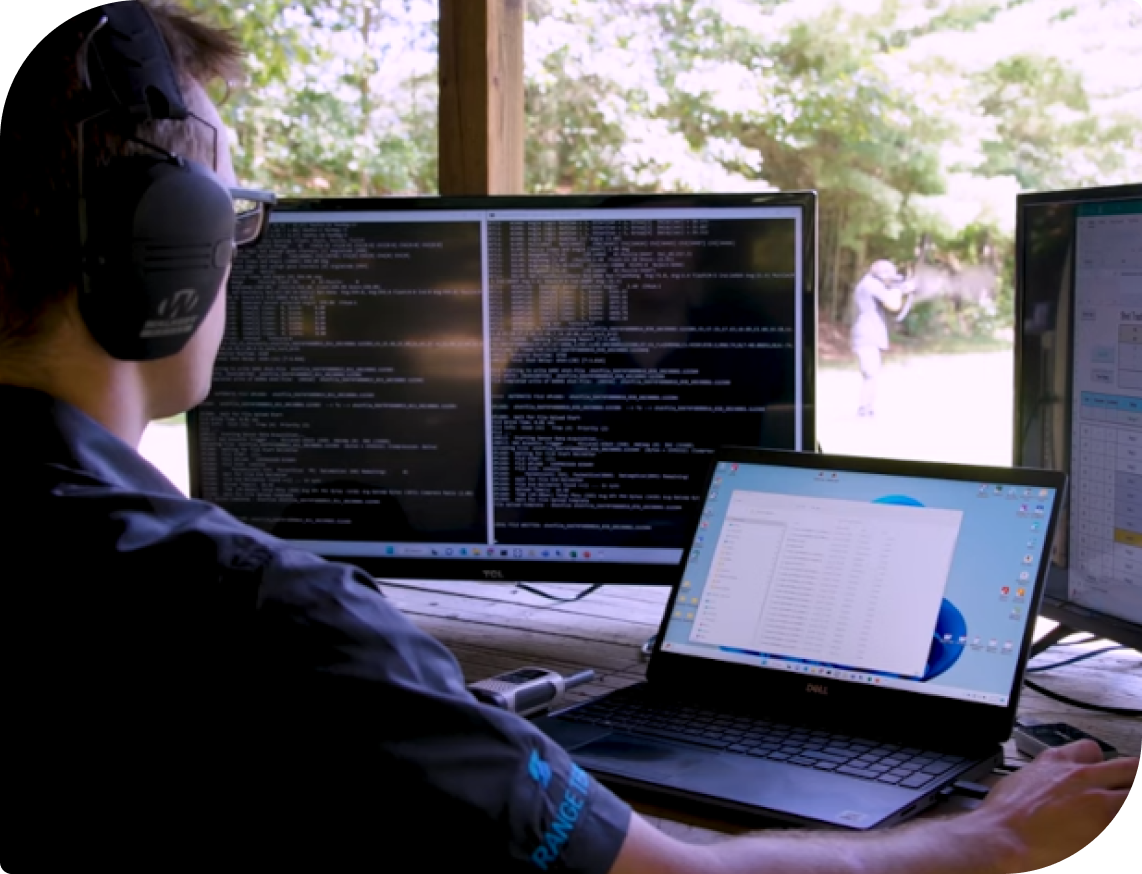
SDS conducted a live multi-zone outdoor test at a large mixed-use commercial property in a major city, spanning exterior street-level approaches, structured parking, and building perimeter zones.
Testing across three distinct outdoor environments confirmed that multiple sensors within overlapping coverage zones alerted simultaneously and independently on a single shot, providing redundant confirmation without conflicting alerts.
Outdoor sensors calculated real-time shot range and directional angle from a single sensor — no triangulation required — giving security teams an immediate, actionable picture of where within a coverage zone a shot originated. The test confirmed consistent SDS Perimeter performance across every outdoor environment type common to large commercial properties.
Commercial Property Gunshot Detection: Frequently Asked Questions
What’s the difference between city-wide gunshot detection (like SoundThinking) and a commercial property solution?
City-wide gunshot detection networks like SoundThinking (formerly ShotSpotter) are designed for public outdoor environments — covering city blocks to help law enforcement identify shooting locations across a municipality. They are not designed to protect private property.
SDS Indoor is purpose-built for the inside of commercial properties — corridors, stairwells, lobbies, and office floors that municipal networks cannot cover. SDS Perimeter extends that same protection to the parking structures, building entrances, and perimeter zones your organization owns and operates.
A city-wide system may tell police a shot was fired somewhere on a particular block. SDS tells your security team and 911 that it was fired on the third floor, northeast corridor, in under one second — automatically, with no manual call required. There is also a privacy distinction worth noting: SoundThinking’s municipal networks have faced scrutiny over audio data retention and sharing practices. SDS sensors do not record audio of any kind — no ambient sound, nor conversations, nothing to retain or share — which matters for tenant trust and liability on private property.
Is acoustic gunshot detection or video-based AI gun detection better for commercial properties?
These are two distinct technology approaches, and multi-factor acoustic and infrared gunshot detection is a third, more reliable option for commercial environments.
Video-based gun detection systems identify drawn weapons before a shot is fired, but require camera coverage of every space and carry significant false alert risk in busy commercial environments where objects, postures, and lighting conditions can trigger misidentification.
Standard acoustic-only detection is faster, but it is prone to false alarms from common commercial building noise like construction, vehicle backfires, and slamming doors in a parking garage.
SDS’s multi-factor approach requires simultaneous confirmation of both an acoustic muzzle blast and an infrared muzzle flash before any alert fires. No visual identification required, no audio storage, and fewer than one false alert per five million hours of sensor use under normal operating conditions.
How does gunshot detection reduce false alarms in commercial environments?
Acoustic-only gunshot detection systems trigger on loud, impulsive sounds. In a commercial building, those sounds are everywhere: nail guns, car doors slamming in a parking garage, construction equipment, and fireworks can all produce an acoustic signature that fools a single-sensor system. SDS requires two simultaneous physical signals to confirm a gunshot: the acoustic wave and the infrared signature of a muzzle flash. The infrared signature of a muzzle flash is spectrally and temporally distinct from other light sources. A slamming door produces no flash at all, and common light sources don’t produce the specific infrared signature pattern of a muzzle discharge. Both signals must be present and validated before any alert fires, which is why SDS Indoor sensors generate fewer than one false alert per five million hours of sensor use under normal operating conditions.
Does gunshot detection for apartment complexes or commercial buildings record or store audio of employees and visitors?
No, and for property owners, the distinction between detection systems matters. Some gunshot detection networks — including city-wide systems like SoundThinking (formerly ShotSpotter) — capture audio data as part of their detection methodology, purging ambient sound after analysis. Flock Safety, another widely deployed surveillance platform, updated its terms of service in 2025, prompting questions from customers about data ownership and how information collected on private property is stored and shared. SDS sensors work differently. They detect two physical phenomena — the acoustic wave and infrared light signature of a muzzle flash — without recording, storing, transmitting, or processing ambient sound of any kind. There is no audio to purge because no audio is captured in the first place. No tenant conversations, no resident discussions, no confidential boardroom exchanges, no stored data of any kind. For owners and managers of commercial buildings, mixed-use environments, and apartment complexes, this architecture eliminates the category of audio surveillance liability, protecting both occupant trust and your organization’s legal exposure.
How quickly does a confirmed gunshot alert law enforcement for a commercial property?
SDS Indoor detects and confirms a gunshot in under one second under normal operating conditions within sensor range, shaving vital minutes off emergency response times compared to manual reporting. The moment confirmation triggers, a simultaneous alert fires to facility security staff via the SDS dashboard, SMS, and email, and to 911 dispatch via ResponderLink, which delivers confirmed shot location — building, floor, and zone — directly to the correct dispatch center. Law enforcement receives verified location data before they arrive on scene, without waiting for a tenant or bystander to make a manual call.