Gunshot Detection for Transportation and Transit Facilities
Train platforms, bus terminals, and transit concourses are among the most acoustically complex environments in the built world. Shooter Detection Systems (SDS) uses multi-factor detection, confirming both an acoustic muzzle blast and an infrared muzzle flash simultaneously before generating any alert. DHS SAFETY Act Certified. Built for environments where conventional systems fall short.
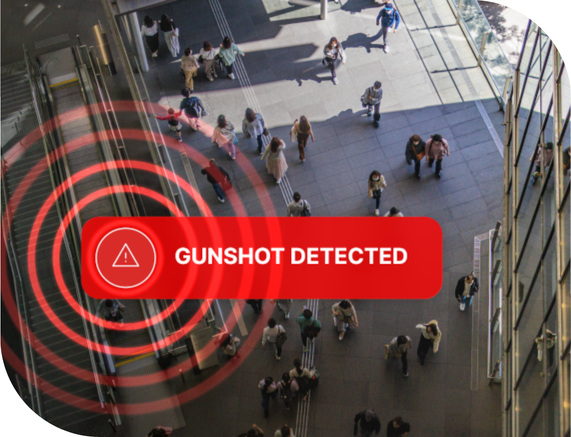
Transit facilities face security threats that conventional detection systems weren’t designed for
Transit environments combine constant high-decibel noise, massive open footprints, and unrestricted public access. That combination exposes three specific gaps that conventional detection systems cannot close.
High-noise environments defeat acoustic-only detection
Train platforms, subway stations, and bus terminals are among the most acoustically demanding environments in any security deployment. Engine noise, PA announcements, crowds, and mechanical equipment create a constant backdrop of high-decibel sound that overwhelms acoustic-only detection systems, producing false alerts that erode trust and compromise operations. SDS uses multi-factor detection, requiring independent confirmation of both an acoustic muzzle blast and an infrared muzzle flash before any alert is generated. Neither signal alone is sufficient. That structural requirement is why SDS delivers a 99.9% detection rate with fewer than one false alert per five million hours of indoor sensor use, regardless of ambient noise levels.
Scale and open access make perimeter screening impractical
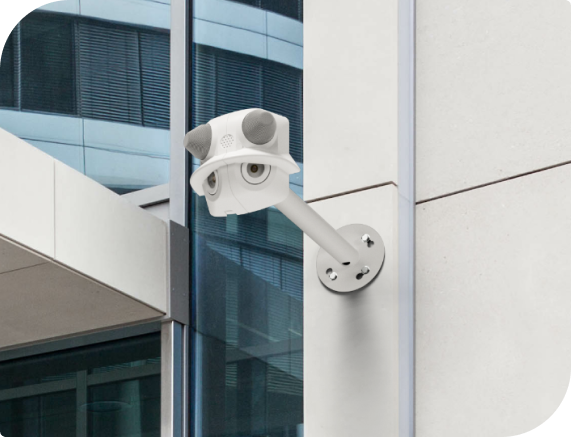
Transit facilities serving thousands of passengers daily cannot rely on traditional weapons screening checkpoints. Open concourses, multiple entry points, and continuous passenger flow make perimeter-based detection impractical at scale. SDS sensors mount to ceilings and walls and require no passenger interaction, no queuing, and no disruption to normal operations. Each indoor sensor covers a minimum of 2,500 square feet. For outdoor areas including bus bays, drop-off zones, and open platforms, SDS Perimeter sensors extend the same multi-factor detection capability beyond the building envelope, covering a minimum of 15,700 square feet per sensor with a 180-degree field of view. Coverage scales across a single station or an entire multi-facility network.
Critical infrastructure demands a faster, more reliable response
Transit facilities are classified as critical infrastructure under DHS and TSA frameworks, making them high-value targets that require proactive security measures. Manual detection (relying on witnesses to call 911) introduces delays that lengthen response times and cost lives. SDS eliminates that delay. The moment both acoustic and infrared signals are confirmed, alerts go simultaneously to security operations, facility staff, and 911 via ResponderLink, with precise building and floor-level location data. The system requires no manual activation to initiate the alert chain.
SDS in Action: Abilene Regional Airport
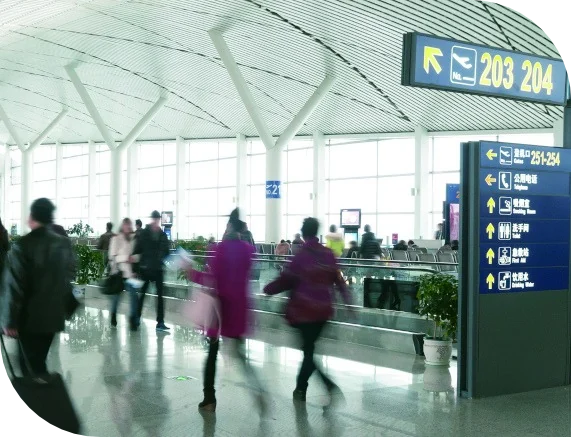
Abilene Regional Airport deployed SDS Indoor across its terminal building in January 2018, becoming the first Texas airport to install active shooter detection technology. The project was funded at 90% by an FAA grant supporting safety and infrastructure improvements at U.S. airports, making it one of the earliest examples of federal grant funding applied to gunshot detection in an aviation setting.
Like all transportation terminals, Abilene Regional is an open, publicly accessible facility where thousands of passengers move through ticketing, baggage claim, and gate areas without weapons screening. SDS Indoor detects gunshots across those spaces continuously, requiring no staff activation and no passenger interaction. When a shot is confirmed, verified location data reaches security operations and first responders automatically.
“This system knows the difference between a gunshot and the sound of a bag drop or mechanical noise in the airport, which is extremely important,” said Don Green, ABI’s Director of Transportation Services. “Confirming that a gunshot event has occurred and getting that alert in sub-one second will allow our first responders to act fast.”
SDS in Action: Charleston International Airport
Charleston International Airport (CHS) deployed the SDS Indoor Gunshot Detection System across all publicly accessible pre-security areas, including ticketing and baggage claim, as part of a broader terminal security upgrade. After an exhaustive review of available gunshot detection systems, CHS selected SDS for its technology, performance, and DHS SAFETY Act Certification. The airport completed a system integration between SDS and its C-CURE 9000 access control system, enabling automatic door locking, PTZ camera queuing, and live video streaming to the security operations center the moment a gunshot is confirmed.
“Safety is our first priority. With this system our first responders will quickly receive shot location information so they can respond directly to a verified threat with added situational awareness. It’s lifesaving technology that adds a vital layer of security against the active shooter threat.” — Paul Campbell, Executive Director and CEO, Charleston County Aviation Authority
Transportation Gunshot Detection: Frequently Asked Questions
Can gunshot detection systems work reliably in noisy transit environments like train stations and subway platforms?
Acoustic-only detection systems struggle in transit environments because engine noise, PA announcements, crowds, and mechanical equipment create a constant backdrop of high-decibel sound that is difficult to distinguish from a gunshot. SDS uses multi-factor detection, requiring independent confirmation of both acoustic muzzle blast and infrared muzzle flash before any alert is generated. Neither signal alone is sufficient to trigger an alert. That structural requirement is why SDS delivers a 99.9% detection rate with fewer than one false alert per 5 million hours of sensor use, regardless of ambient noise levels.
Is gunshot detection appropriate for transit facilities with very high passenger volumes?
Yes. SDS sensors are passive devices that mount to ceilings and walls. They require no passenger interaction, create no queues, and place no constraints on normal passenger flow. Detection performance does not degrade as passenger volume increases because the system detects gunshots in the physical environment, not the people moving through it. Each indoor sensor covers a minimum of 2,500 square feet, and coverage scales across a single station or a multi-facility network without recalibration. For transit agencies evaluating detection technology, passenger volume is not a limiting factor for SDS.
How does SDS integrate with transit facility security operations centers?
SDS integrates with transit facility security operations centers through system integration with 50+ certified third-party security platforms, including video management systems, access control, and mass notification. When a shot is confirmed, integrated systems respond automatically: cameras execute video call-up at the point of detection, access control initiates configured lockdown or egress protocols, and mass notification reaches designated staff across the affected area. Detection events can also route directly into computer-aided dispatch systems, connecting a gunshot detection event to the dispatch workflow at the police department or 911 center without a manual relay step. SDS is designed to work within the security infrastructure a transit facility already has in place, not alongside it as a separate system requiring separate attention.
Does SDS detect gunfire on outdoor transit areas like bus bays and platform ends?
Yes. SDS Perimeter sensors extend multi-factor detection to outdoor transit areas including bus bays, drop-off zones, open platforms, and adjacent outdoor spaces. Each Perimeter sensor covers a minimum of 15,700 square feet with a 180-degree field of view, and delivers a detection alert in under three seconds. Perimeter sensors operate within the same integrated platform as SDS Indoor sensors, so a shot fired anywhere across the facility indoors or out generates a single, unified alert rather than separate notifications from disconnected systems.
What happens between detection and police response?
When SDS confirms a gunshot, the full response chain executes automatically. Simultaneous alerts go to security operations, facility staff, and 911 via ResponderLink, with precise building and floor-level location data. Integrated cameras auto-direct to the shot location, providing immediate visual context for the operations center. Access control initiates configured lockdown or egress protocols. Law enforcement receives floor-level location data before arriving on scene. The entire chain, from confirmed detection to alerts reaching every designated recipient, requires no manual activation. Responders arrive with verified location information rather than fragmentary witness reports, which helps shorten response times.
Is SDS approved or certified for use in critical infrastructure?
Shooter Detection Systems (SDS) holds DHS SAFETY Act Certification, the highest level of SAFETY Act recognition available. The SAFETY Act (Support Anti-terrorism by Fostering Effective Technologies Act) is a federal program that provides defined liability protections for organizations that deploy government-reviewed security technologies. SAFETY Act Certification reflects independent government review of the technology’s effectiveness and operational standards, a meaningful threshold for transit agencies and transportation authorities evaluating detection systems for critical infrastructure environments. SDS detection performance has also been independently validated by the UK’s National Protective Security Authority in an 18-month evaluation recording a 99.9% detection rate.
What is the installation process for a transit facility?
SDS Indoor sensors connect over standard Power over Ethernet (PoE) infrastructure or deploy wirelessly via LoRa, a low-power, long-range wireless protocol that operates independently of public Wi-Fi networks. The wireless option is particularly well-suited to legacy transit infrastructure where new cabling is difficult or cost-prohibitive. Each indoor sensor covers a minimum of 2,500 square feet and requires no calibration once powered and connected. Coverage scales across a single station or an entire multi-facility network by adding sensors and access points with no system-wide reconfiguration required. SDS engineering provides a certified design review and detector layout for every deployment.