Hospital Gunshot Detection System
Hospitals face a unique security challenge: high foot traffic, open access points, and environments where a delayed response can compound harm to patients, staff, and visitors. SDS delivers real-time gunshot detection purpose-built for healthcare facilities — confirming gunfire in under one second, pinpointing the exact location, and simultaneously alerting security staff and 911 with no audio recording and no disruption to clinical operations.
Healthcare is one of the most dangerous environments for gun violence
Healthcare workers are four to five times more likely to be victims of workplace violence than employees in the private sector. Emergency departments, psychiatric units, and hospital lobbies concentrate stress, unpredictability, and public access in ways that few other environments match. Patients who cannot move, staff who cannot leave their posts, and visitors in crisis create a security environment unlike any other — one where the consequences of a delayed response extend far beyond the immediate incident.
Traditional screening can’t protect what’s already inside
Healthcare workers are four to five times more likely to be victims of workplace violence than employees in the private sector. Emergency departments, psychiatric units, and hospital lobbies concentrate stress, unpredictability, and public access in ways that few other environments match. Patients who cannot move, staff who cannot leave their posts, and visitors in crisis create a security environment unlike any other — one where the consequences of a delayed response extend far beyond the immediate incident. That gap exists in most hospitals today. And in a clinical environment where staff are focused on patient care, the assumption that someone will witness a shooting and manually trigger an alert is not a security plan.
How SDS Hospital Gunshot Detection Works
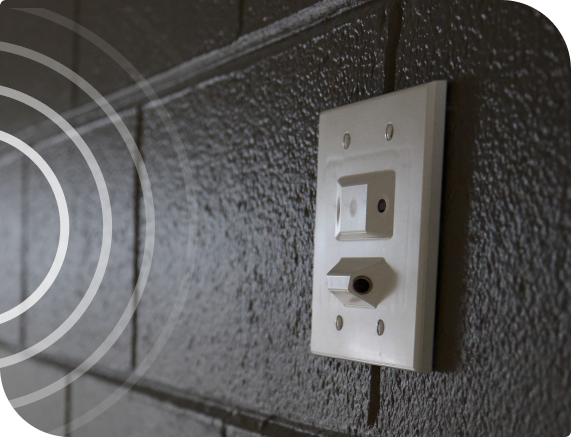
SDS uses multi-factor detection — combining acoustic and infrared sensors — to confirm gunfire in under one second within sensor range. Both signals must be present simultaneously before any alert fires, which is what delivers 99.9% accuracy and a near-zero false alarm rate in acoustically complex clinical environments.
Acoustic + infrared multi-factor detection
SDS requires two independent physical signals — acoustic muzzle blast and infrared muzzle flash — to be present simultaneously before any alert is triggered. Neither signal alone is sufficient.
This dual-physical confirmation is what separates SDS from single-sensor acoustic systems and is the structural reason the system maintains a near-zero false alarm rate in environments like emergency departments and hospital lobbies where loud, unpredictable noise is constant.
Sub-second detection and automated alerting
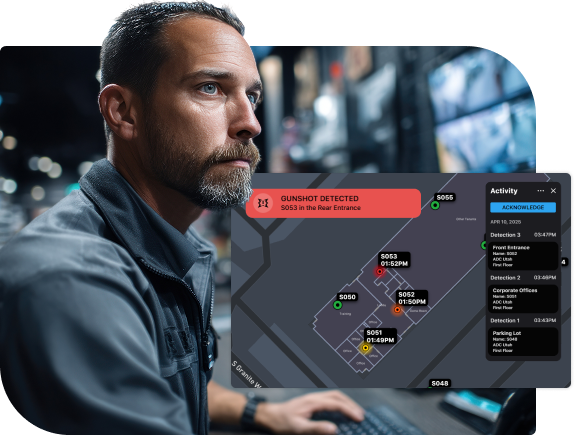
The moment gunfire is confirmed within sensor range, SDS simultaneously alerts facility security teams via the dashboard, SMS, and email. The moment gunfire is confirmed within sensor range, SDS simultaneously alerts facility security teams via the dashboard, SMS, and email. The floor plan of the impacted area is instantly displayed, including building, floor, and zone information.
ResponderLink routes verified location data directly to the correct 911 dispatch center, giving law enforcement precise location intelligence before they arrive on scene. Under normal operating conditions, SDS sensors alert in under one second indoors and under three seconds outdoors.
No audio recording. Designed with HIPPA considerations in mind
SDS sensors detect two physical phenomena — acoustic waveform and infrared flash. No audio is recorded, stored, or transmitted. No patient data or personally identifiable information is collected or processed at any point.
For healthcare organizations evaluating HIPAA compliance implications, SDS’s passive, non-recording architecture means gunshot detection can be deployed without introducing audio surveillance concerns into a clinical environment.
Built for the demands of a healthcare environment
SDS uses multi-factor detection — combining acoustic and infrared sensors — to confirm gunfire in under one second within sensor range. Both signals must be present simultaneously before any alert fires, which is what delivers 99.9% accuracy and a near-zero false alarm rate in acoustically complex clinical environments.
99.9% detection rate
Validated by independent third-party testing including an 18-month evaluation by the UK’s National Protective Security Authority: 99.9% detection rate, 0% false alert rate — under controlled test conditions across a range of firearm calibers and shooter positions.
Fewer than 1 false alarm per 5 million hours
Healthcare environments have zero tolerance for false alarms. A misdirected staff response, a disrupted care environment, an eroded trust in the system — the cost adds up fast.
Fewer than one false alert per five million hours of sensor use under normal operating conditions means your team acts on every alert with confidence.
Alerts in seconds – indoors and outdoors
SDS detects and confirms a gunshot in under one second indoors and under three seconds outdoors, under normal operating conditions within sensor range — simultaneously alerting security staff, initiating integrated response protocols, and routing verified location data to 911 dispatch.
From an emergency department waiting room to a parking structure or ambulance bay, the alert chain runs automatically before a manual call is even possible.
DHS SAFETY Act Certified
SDS is the only gunshot detection manufacturer to hold the highest level of DHS SAFETY Act recognition — Designation and Certification. For healthcare organizations, that distinction carries weight in three directions: independent government validation of the technology’s effectiveness, defined federal liability protections for organizations that deploy it, and a stronger foundation for demonstrating proactive duty of care to hospital leadership, legal counsel, and insurers.

Designed to protect hospitals without disrupting them
Passive protection — no screening lines, no workflow disruption
SDS sensors mount to ceilings and walls throughout a facility — no entry checkpoints, no screening lines, no staff overhead to operate them. Patients and visitors move through the building normally, unaware the system is present. Clinical staff focus on patient care, not security monitoring.
When gunfire occurs within sensor range, the system responds automatically — no human activation required, no delay while someone decides what to do.
Covers every environment on a hospital campus
A hospital campus is not a single building. SDS scales from a single emergency department to a multi-building health system — covering waiting rooms, patient corridors, and clinical spaces indoors, and emergency room entrances, ambulance bays, and parking structures outdoors. Indoor sensors cover approximately 2,500 sq. ft. each; outdoor sensors extend coverage across perimeter areas and open campus spaces. All locations report into a single unified platform, giving security teams visibility across the entire campus from one dashboard.
Integrates with your existing security infrastructure
SDS integrates with 50+ certified third-party security platforms — including video management, access control, and mass notification systems. When gunfire is confirmed, the response executes automatically: cameras lock on to the shot location, access control initiates configured lockdown protocols, and mass notification reaches staff across the affected area simultaneously. No manual coordination. No delay while someone navigates a fragmented system. SDS activates the security infrastructure your facility has already invested in.
ResponderLink: flexible 911 routing with verified location data
ResponderLink routes verified gunshot alerts directly to the correct 911 dispatch center — automatically, with precise floor and room-level location data, before law enforcement arrives on scene. For healthcare organizations with existing emergency protocols, ResponderLink configures alongside them: route alerts directly to 911, hold for operator confirmation before dispatch, or connect through your existing emergency communication integration.
How SDS Protects a Major Academic Medical Center
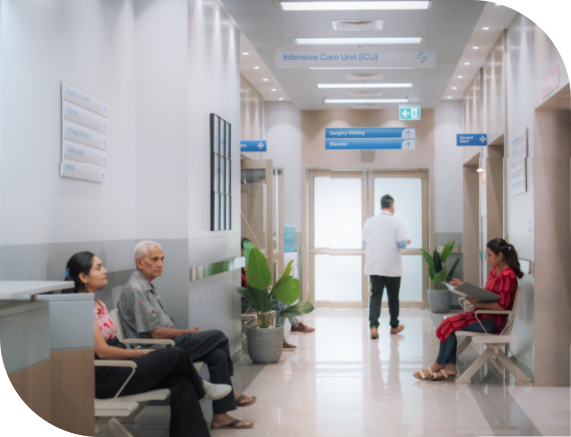
One of the largest academic medical centers in the United States — a flagship hospital with over 1,000 beds, 35,000+ employees, and more than 2.4 million outpatient visits annually — deployed SDS across its emergency department to deliver real-time gunshot detection in one of its highest-traffic, highest-risk clinical environments. As the health system expands its emergency care footprint with a new building currently under development, SDS coverage is scaling alongside it on the same unified platform.
Hospital Gunshot Detection: Frequently Asked Questions
Does a gunshot detection system create compliance or privacy issues for hospitals?
No. SDS gunshot detection sensors detect two physical phenomena — acoustic muzzle blast and infrared muzzle flash. No audio is recorded, stored, or transmitted. No images are captured. No patient data or personally identifiable information is collected at any point. For healthcare organizations evaluating HIPAA compliance implications, SDS’s passive, non-recording architecture means gunshot detection can be deployed without introducing audio surveillance concerns into a clinical environment.
How does dual-factor detection reduce false alarms in a hospital setting?
Hospital environments generate constant acoustic complexity — equipment alarms, supply carts, slamming doors, and crowded waiting areas all produce sounds that can trigger single-sensor acoustic systems. SDS requires simultaneous confirmation of two independent physical signals — acoustic muzzle blast and infrared muzzle flash — before any alert fires. Because both must be present and validated, common noise sources are filtered out entirely. Under normal operating conditions, SDS Indoor sensors generate fewer than one false alert per five million hours of sensor use — a performance standard that matters in a clinical environment where a false alarm redirects staff and disrupts patient care.
Can SDS scale across multiple hospital buildings or a campus system?
Yes. SDS scales from a single emergency department to a multi-building health system, with all locations managed through a single unified platform. Indoor sensors cover approximately 2,500 sq. ft. each and install plug-and-play with no calibration required. Outdoor sensors extend the scalable coverage to parking structures, ambulance bays, and campus perimeters. As your health system grows — whether adding a new facility or expanding an existing campus — coverage scales on the same platform without recalibration or additional infrastructure investment.
How quickly does law enforcement get notified?
When gunfire is confirmed within sensor range, ResponderLink routes verified shot location — including floor and room-level data — directly to the correct 911 dispatch center automatically, under normal operating conditions in seconds. Law enforcement receives precise location intelligence before they arrive on scene, not after. For healthcare organizations with existing emergency communication protocols, ResponderLink configures alongside them — routing alerts directly to 911, holding for operator confirmation before dispatch, or connecting through your existing integration.
Does SDS work alongside existing hospital security systems?
Yes. SDS integrates with 50+ certified third-party security platforms including video management, access control, and mass notification systems. When gunfire is confirmed, the response executes automatically: cameras lock on to the shot location, access control initiates configured lockdown protocols, and mass notification reaches staff across the affected area simultaneously. SDS is designed to activate and amplify the security infrastructure your facility has already invested in — with no manual coordination and no disruption to existing workflows.
What is the installation process for a hospital environment?
SDS indoor sensors install plug-and-play over standard Power-over-Ethernet infrastructure or wirelessly via LoRa connectivity — with no calibration required and no dedicated wiring or proprietary hardware. Each indoor sensor covers approximately 2,500 sq. ft. and mounts to a ceiling or wall, making deployment straightforward in both existing facilities and new construction without disrupting active clinical areas. Outdoor sensors extend the same plug-and-play simplicity to parking structures, ambulance bays, and building entrances. Coverage scales from a single department to a multi-building health system without recalibration or additional infrastructure investment.
How does SDS perform in a hospital's acoustically complex environment?
Hospital environments generate constant noise — equipment alarms, PA announcements, supply carts, HVAC systems, and crowded waiting areas all produce sounds that can trigger single-sensor acoustic systems. SDS requires simultaneous confirmation of two independent physical signals — acoustic muzzle blast and infrared muzzle flash — before any alert fires. Because both must be present and validated at the same moment, common hospital noise sources are filtered out entirely. Under normal operating conditions, SDS Indoor sensors generate fewer than one false alert per five million hours of sensor use.