Critical Infrastructure Gunshot Detection: Protecting Power, Water, Data, and Transportation Sites
Critical infrastructure gunshot detection from Shooter Detection Systems gives solar farms, data centers, electrical substations, water treatment plants, rail yards, and other unmanned or remote industrial sites sub-second automated gunshot alerts, verified to 99.9% accuracy by the UK’s National Protective Security Authority (NPSA). SDS Indoor and SDS Perimeter sensors cover both the interior and perimeter of a facility on one integrated platform, with no human verification required before an alert fires.

Critical infrastructure isn’t one site type — a single-layer system can’t cover all of them
Substations, control buildings, water treatment plants, data centers, rail yards, and solar installations each present a different physical-security challenge, shaped by its own security threats. A detection system designed for one of these environments will underperform in the others.
Every site type has a different physical footprint and risk profile
An electrical substation is often entirely remote and unmanned, with high-value transformers and switching equipment that are slow and expensive to replace. A utility’s corporate or operations office is where the people who run the grid actually work. Protecting that building means protecting the staff and the operational continuity of the system they manage. A water treatment plant runs around the clock with a skeleton crew, mixing occupied control rooms with outdoor chemical storage that cannot be left unmonitored. A data center’s perimeter may already be hardened with access control and video surveillance, but none of those security measures can tell a security team a firearm has been discharged until someone reports it. A rail yard has no clean perimeter to defend: it is long, linear, and built to move freight, not to stop an intruder. A solar installation stretches across terrain that no fence line fully covers and no on-site guard routinely patrols. No single acoustic-only or system covers this range cleanly.
Acoustic-only detection struggles across open, remote, or noisy industrial environments
Open outdoor terrain subjects acoustic-only systems to wind, distance, and terrain interference that degrades detection reliability. Industrial sites compound the problem: pumps, generators, compressors, and rail traffic produce constant ambient noise that raises false-alarm risk for any system relying on a single signal. SDS’s dual-factor detection requires both an acoustic muzzle-blast signature and an infrared muzzle-flash signature before an alert fires. The sensor will not alert on acoustics alone, regardless of how closely an industrial sound resembles a gunshot. That cross-validation step is what makes the system viable in environments where acoustic-only detection is not.
Many of these sites are unmanned or remotely operated
Substations, remote pump stations, pipeline sites, and similar facilities are frequently unstaffed for extended periods. On-site human monitoring is not a realistic first line of detection at these remote locations. An automated system that generates a verified alert the moment a gunshot is detected, and routes that alert directly to a control room, a third-party monitoring center, or law enforcement dispatch, is structurally necessary at unmanned sites. SDS Indoor and SDS Perimeter sensors process and confirm detections at the edge, within the sensor itself, and transmit an alert in under three seconds, with no human verification required before the alert fires.

Attacks on critical infrastructure are a documented, rising concern
Physical attacks and intrusions targeting energy, water, and transportation infrastructure have become a recognized and growing security-planning concern for facility operators across the United States. Federal agencies responsible for infrastructure protection have documented an increase in physical security incidents at substations, pipelines, and related sites in recent years. As threats evolve, security directors at these facilities are actively evaluating which detection and response capabilities belong in a layered physical security plan.
How gunshot detection supports NERC CIP-014 compliance
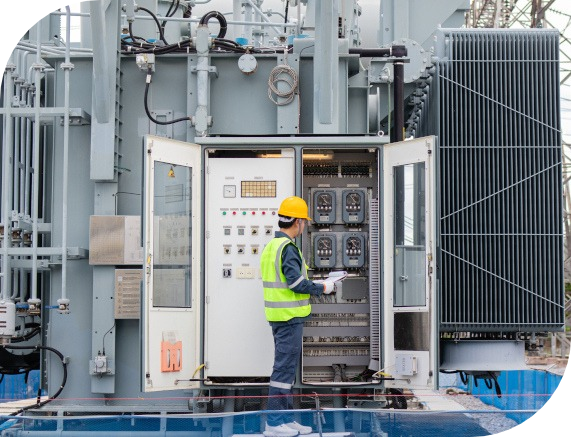
NERC CIP-014 requires transmission owners to assess physical-security vulnerabilities at their most critical substations and implement a documented security plan to address them. The standard does not prescribe specific technologies, but it does require that the plan address the realistic threat of physical attack on transmission infrastructure. Automated gunshot detection supports that obligation directly: a verified alert fires within seconds of a discharge, routes immediately to control-room staff or law enforcement, and creates a timestamped event record for post-incident review and compliance documentation. SDS has utility-sector deployment history under CIP-014, with 10 major utilities using SDS’s indoor and outdoor gunshot detection technology to protect workspaces and other critical infrastructure sites.
Dual-factor detection: acoustic + infrared, indoors and out
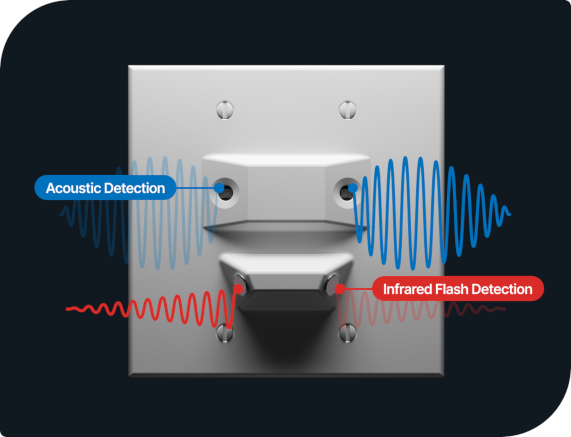
Every SDS sensor, indoor and outdoor, requires two independent signals before an alert fires: an acoustic muzzle-blast signature and an infrared muzzle-flash signature. Both must be present. Regardless of how closely an industrial sound resembles a gunshot, the sensor will not alert on acoustics alone. That cross-validation is what makes the system viable in the pump rooms, generator bays, and open yards that define critical infrastructure sites.
All detection processing happens at the edge, inside the sensor itself. No audio leaves the sensor, and the system can operate on SDS’s own independent LoRa wireless network without relying on a facility’s IT infrastructure or internet connectivity. For utilities and other operators with strict network-isolation requirements, that means full gunshot detection capability without touching the corporate network.
SDS Perimeter for Outdoor Detection
SDS Indoor covers control rooms, pump houses, substation control buildings, and plant interiors. SDS Perimeter covers fence lines, yards, and open outdoor terrain. Both sensor types operate within the same platform, managed through a single gateway, so a facility with both indoor and outdoor exposure does not need two separate systems or two separate vendors.
Automatic Communications with 911 & First Responders
When a detection occurs, ResponderLink can route the alert directly to 911 dispatch, to a control room, or to both simultaneously, with no human intermediary required. For facilities that prefer a confirmation step before dispatch, that workflow is configurable at the facility level.

Substation & Grid Security
An electrical substation is one of the most consequential targets in the critical infrastructure landscape. Transformers and switching equipment are expensive, slow to replace, and, in some cases, custom-manufactured with lead times measured in months. Most substations operate without on-site staff, which means a physical security incident can go undetected until the damage is done. SDS Perimeter sensors cover the substation yard and fence line, generating a verified alert within seconds of a discharge and routing it directly to a control room or law enforcement, with no on-site personnel required to initiate the response. For utilities managing NERC CIP-014 compliance obligations, automated gunshot detection is a documented component of a physical security plan.
Corporate Workspaces and Operations Centers
The people who operate critical infrastructure work somewhere. For utilities, that means control centers, operations offices, and executive facilities where the decisions that keep the grid running are made. These environments carry a different risk profile than a remote substation: they are occupied, they concentrate leadership and operational staff in one location, and they are subject to the same workplace violence exposure as any corporate environment. SDS Indoor sensors provide sub-second gunshot detection across office floors, lobbies, and operations centers, giving security teams and building staff immediate, verified notification without waiting for a 911 call or a witness report. For organizations with executive protection programs, automated indoor detection is a layer that operates continuously, regardless of whether a threat is anticipated.
Data Center Perimeter Security
A data center’s perimeter is typically already hardened: access control that limits entry to authorized personnel, cameras, and physical barriers are standard. What most data center security stacks do not include is a layer that tells the security operations center a firearm has been discharged, in real time, before anyone has called it in. SDS Perimeter sensors add that layer without displacing existing infrastructure. When a detection occurs, the alert can automatically trigger camera PTZ positioning, lock access control points, and notify on-site security and law enforcement simultaneously. For data center operators managing co-location agreements or uptime SLAs, the ability to initiate a verified, coordinated response in seconds rather than minutes is a meaningful operational distinction.
Water Treatment Plant Security
Water treatment facilities present a layered security challenge: occupied control and process buildings sit alongside outdoor tankage, chemical storage, and intake infrastructure, often with a small on-site crew and a perimeter that is difficult to fully secure. SDS Indoor covers the control room and process building interiors. SDS Perimeter covers the outdoor yard, tank farm, and fence line. Both operate on the same platform, so a single detection event triggers a coordinated alert across the entire facility rather than a siloed notification from one sensor type. Water infrastructure is a designated critical infrastructure sector, and the physical security of treatment and distribution facilities is an active area of regulatory and operational focus.
Rail Yard Security
A rail yard is built to move freight, not to stop an intruder. The perimeter is long, linear, and interrupted by track access points that cannot be fully fenced without disrupting operations. SDS Perimeter sensors can be deployed along the right-of-way and at key access points, providing continuous coverage across a site geometry that video surveillance and guard patrols struggle to monitor completely. Adjacent transportation and logistics environments, including freight terminals and seaports, present similar perimeter challenges and are supported by the same outdoor sensor platform.
Solar Farm Security
A solar installation can span hundreds of acres of open terrain, with panel arrays, inverter stations, and collection infrastructure spread across a site that no fence line fully covers and no on-site guard routinely patrols. Theft, vandalism, and perimeter intrusion are documented operational risks at solar facilities, and a gunfire incident in a remote area of a large installation may go unreported for an extended period without automated detection. SDS Perimeter sensors can be distributed across a solar site to provide coverage across the full installation, with alerts routing to a remote monitoring center or directly to law enforcement.
Other Critical Infrastructure Sites We Protect
Oil and gas facilities, refineries, and pipeline infrastructure share the remote-site and perimeter-length challenges that define this category: high-value assets, limited on-site staffing, and terrain that is difficult to monitor continuously. Chemical plants are high-risk environments because of hazardous-material storage, where a security incident can have consequences beyond the immediate site. Dams and hydroelectric facilities are designated critical infrastructure with perimeter exposure that is difficult to fully secure. Nuclear facilities operate under their own regulatory security frameworks, and gunshot detection can function as one layer within a broader physical protection system. Telecom infrastructure, including cell tower sites and switching facilities, is frequently unmanned and geographically dispersed.
Integrating with your facility’s existing security infrastructure
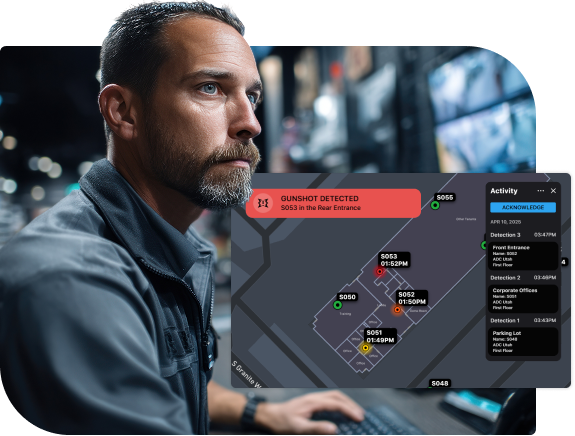
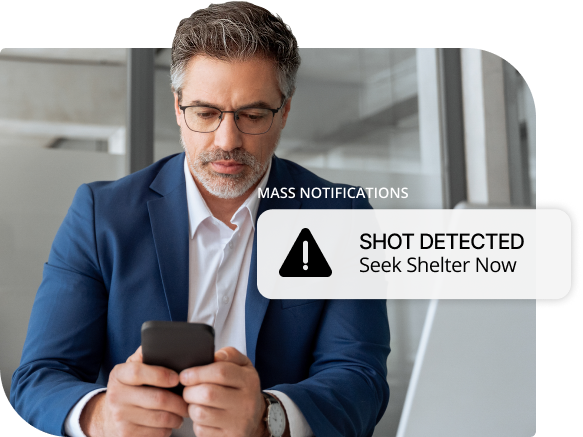
A gunshot detection system that operates in isolation from the rest of a facility’s security stack is a missed opportunity. When SDS detects a discharge, that event can automatically trigger camera PTZ positioning and recording in your video management system, initiate lockdown or egress actions through your access control platform, and push simultaneous alerts through your mass notification system, all within the same detection event. SDS maintains certified integrations with leading VMS, access control, and mass notification platforms, including Avigilon, Milestone, Genetec, Honeywell, Siemens, Everbridge, Singlewire, and others. The system activates the video surveillance, access control, and other security measures you have already invested in rather than replacing them.
For critical infrastructure operators with specific integration requirements, contact us to discuss your facility’s security stack and our ONVIF sensor development.
Does gunshot detection prevent attacks on critical infrastructure?
Gunshot detection does not prevent an individual’s decision to commit an attack. No single technology does. What it does is compress the time between a discharge and a verified, coordinated response, giving control-room operators, on-site personnel, and law enforcement accurate situational awareness in seconds rather than minutes. At an unmanned substation or a remote pump station, that difference is significant: without automated detection, a gunfire incident may go unreported until someone notices the damage. With it, a verified alert reaches the right people immediately, with location data attached.
Gunshot detection is one layer in a physical security program, alongside other security measures such as perimeter fencing, access control, camera systems, and emergency response planning. It does not replace any of those layers. It makes all of them faster to activate.
Critical Infrastructure Gunshot Detection: Frequently Asked Questions
What is critical infrastructure gunshot detection?
Critical infrastructure gunshot detection is sensor-based technology that automatically identifies a firearm discharge and delivers a verified alert to control-room operators, on-site security staff, or law enforcement in real time, with no human verification required before the alert fires. SDS Indoor and SDS Perimeter sensors are deployed across power generation and distribution facilities, water treatment plants, data centers, rail yards, and other infrastructure sites where a fast, accurate response to a gunfire incident is operationally critical. Detection occurs at the edge, inside the sensor itself, and alerts transmit in under one second indoors, three seconds outdoors.
How does gunshot detection support NERC CIP-014 compliance?
NERC CIP-014 requires transmission owners to assess physical-security vulnerabilities at their most critical substations and implement a documented security plan to address them. Automated gunshot detection supports that obligation by providing verified, timestamped detection events that can be incorporated into a CIP-014 physical security plan as a documented response capability. An alert fires within seconds of a discharge and routes directly to control-room staff or law enforcement, creating an auditable event record for compliance documentation. SDS has utility-sector deployment history under CIP-014, with 10 major utilities using SDS indoor and outdoor gunshot detection technology to protect workspaces and critical infrastructure sites.
How accurate is gunshot detection technology, and how are false alarms prevented?
SDS Indoor was independently evaluated by the UK’s National Protective Security Authority (NPSA) over 18 months in a real-world installed environment. The system recorded a 99.9% detection rate and a 0% false alert rate across the full evaluation period. False alarm prevention is structural, not software-filtered: every SDS sensor requires both an acoustic muzzle-blast signature and an infrared muzzle-flash signature before an alert fires. Industrial noise sources, including pumps, generators, compressors, and vehicle traffic, produce one signal but not both in the specific combination the sensor requires. SDS Perimeter produces fewer than one false alert per one million operational hours under normal operating conditions.
Can gunshot detection be deployed at unmanned sites or in remote locations?
Yes, gunshot detection can be deployed at unmanned sites and in remote locations. SDS Indoor and SDS Perimeter sensors are specifically suited to unmanned and remotely operated facilities. All detection processing happens at the edge, inside the sensor itself, with no audio transmitted off the device. When a detection occurs, the alert routes automatically to a control room, a third-party monitoring center, or law enforcement dispatch, with no on-site personnel required to initiate the response. Substations, remote pump stations, pipeline sites, and similar facilities are among the environments where this capability is most operationally relevant.
What critical infrastructure sites use gunshot detection?
SDS Indoor and SDS Perimeter are deployed across electrical substations, utility operations centers, data centers, and corporate workspaces operated by critical infrastructure organizations. The same platform is well-suited to water treatment and distribution facilities, solar installations, rail yards, oil and gas facilities, refineries, chemical plants, pipeline infrastructure, dams, nuclear facilities, and telecom sites, where the operating environment, whether unmanned, remote, or around the clock, creates the same core requirement: a verified, automated gunshot alert that reaches the right people immediately, without waiting for a witness or a 911 call.
How does gunshot detection integrate with existing facility security systems?
SDS maintains more than 50 certified integrations with leading video management, access control, and mass notification platforms. When a detection occurs, the system can automatically direct cameras to the incident location, initiate lockdown or egress actions through your access control platform, and push simultaneous alerts through your mass notification system, all within the same detection event. The system is designed to activate the security infrastructure a facility has already invested in rather than replace it. For facilities with specific integration requirements, contact us to discuss your security stack.
Does gunshot detection prevent attacks on critical infrastructure?
Gunshot detection does not prevent an individual’s decision to commit an attack. What it does is compress the time between a discharge and a verified, coordinated response, giving control-room operators and law enforcement accurate situational awareness in seconds rather than minutes. It is one layer in a physical security program, alongside perimeter fencing, access control, camera systems, and emergency response planning.
Is SDS certified for critical infrastructure applications?
Shooter Detection Systems holds DHS SAFETY Act Certification at the highest level and is the only gunshot detection manufacturer to have achieved this status. SAFETY Act Certification, represented by the red DHS seal, requires the Department of Homeland Security to have high confidence in a technology’s ongoing effectiveness and confers the Government Contractor Defense, the program’s most significant legal protection. SDS first achieved Certification in 2017 and successfully renewed it in 2023. For utility operators and other critical infrastructure organizations evaluating gunshot detection technology, SAFETY Act Certification is the most rigorous independent standard available in this category.